
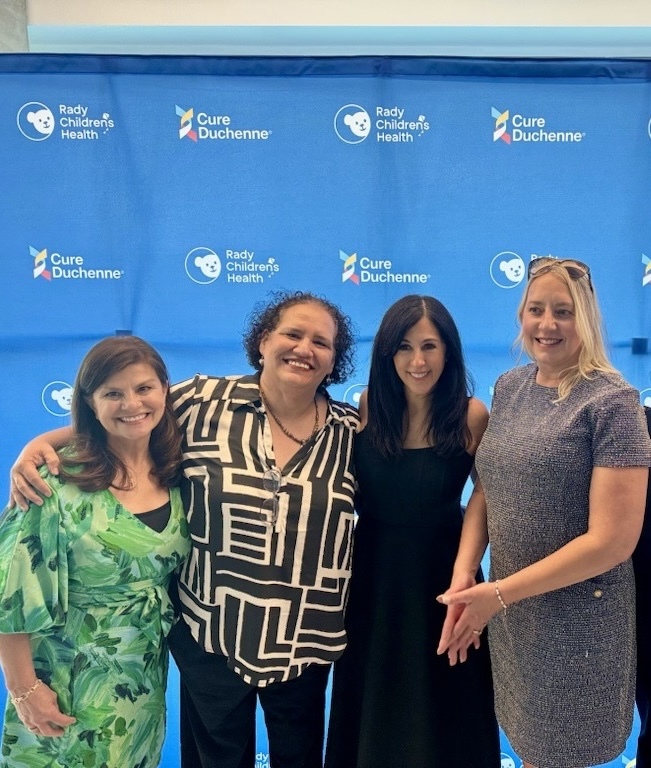
Our Patient Advocacy team stays in motion because they build relationships with patient organizations across four disease communities, connecting patients to resources and bringing their voices to teams across the company. In 2025 alone, they supported 173 patient events, from Duchenne Muscular Dystrophy workshops and patient meetings to regional myasthenia gravis (MG) health fairs to the first Lambert-Eaton Myasthenic Syndrome (LEMS) Awareness Day summit, each one designed to meet patients where they already are. And earlier this January, they brought that same dedication to life by launching our first-ever Catalyst Advocacy Scholars Summit, a program built to empower and shape patient advocates in a meaningful new way.
What drives them through all of this isn’t just work; it’s genuine passion. The Advocacy team has become Catalyst’s true north star, the team our CEO looks to as the forefront of how we engage with patient communities, guiding and shaping everything we strive to accomplish. One belief that has stayed with the team from countless patient conversations is the idea that life doesn’t end at diagnosis. It’s a message they’ve heard repeatedly from the people they serve, and it fuels everything they do. Our team takes pride in ensuring patients feel heard, supported, and understood as they navigate the emotional, physical, and logistical challenges that can follow a diagnosis.
Our Director of Patient Advocacy, Carrie Ostrea, was led to patient advocacy by her daughter. “I lost my daughter Hannah to a rare disease when she was 3. After she passed away, I couldn’t stop advocating for kids like Hannah and families like ours, which is why I turned my personal advocacy into a professional one. It’s why I do what I do, and it’s part of what drives our whole team.”
Our advocates remain deeply aware of what patient organizations and communities already provide, continuously taking note of where support is abundant—and where gaps still exist. Their goal is to complement what is already being done, to step in where needed, and to be the steady presence that helps patients feel less alone.
“I work in patient advocacy because rare disease communities are too often unheard,” says Amy Grover, Executive Director of Patient Advocacy. “Being able to listen and amplify their voices, and help turn experiences into meaningful change, is what drives me every day.”
For patients, there is no “one-size-fits-all” approach. Every patient has a different story, a different set of circumstances, and a different journey. And whether they’re collaborating with professional organizations or supporting individuals one-on-one, our Patient Advocacy team adapts. They listen. They learn. They show up in the way each patient needs, not just the way that’s most convenient.
Their work is thoughtful, human, and deeply compassionate—and it’s part of what makes our entire organization stronger, kinder, and more connected to the people we serve.